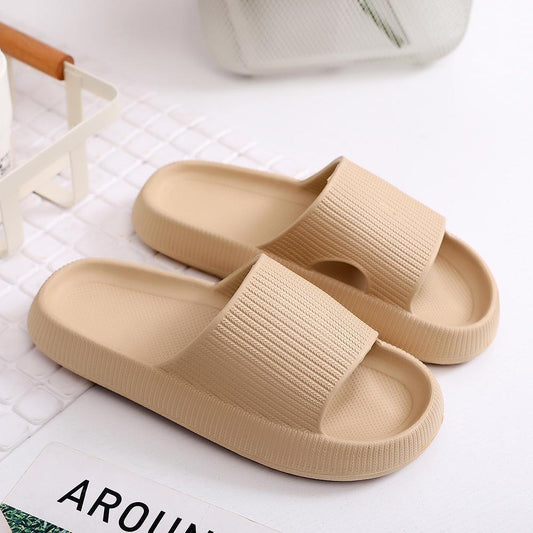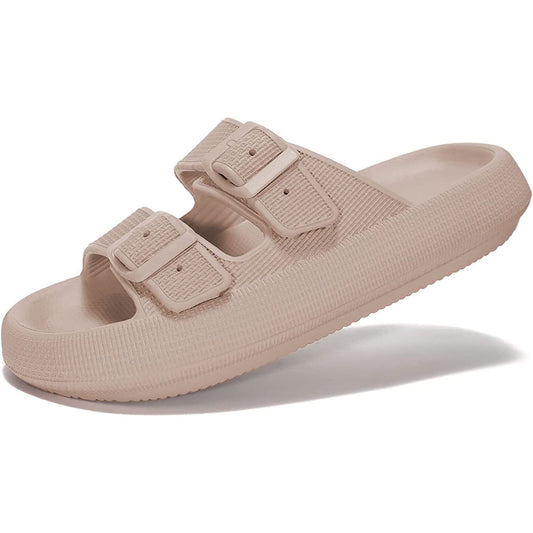


The best sandals for narrow feet hold the heel and midfoot securely without forcing the toes to grip. Because width labels are inconsistent across brands, the most reliable approach is to compare measurements and look for multiple adjustment points.
What are the best sandals for narrow feet?
Start with sandals that have adjustable straps across the forefoot, instep, or ankle. Buckles, hook-and-loop closures, and adjustable heel straps let you reduce excess volume. A contoured footbed can also help center the foot, but it should match your arch and heel rather than pushing them out of position.
Features that improve a narrow fit
- Multiple adjustable straps: More adjustment points provide better control than a single fixed band.
- An ankle or heel strap: This limits heel lift and forward sliding.
- A narrower footbed: Your foot should not drift far from side to side.
- A defined heel cup: A gently shaped heel area can improve stability.
- Low-bulk uppers: Thick, fixed straps may leave too much space over a low-volume foot.
How sandals for narrow feet should fit
Stand with your full weight on both feet. Your toes and heel should remain inside the edge of the footbed, and the widest part of your foot should line up with the widest part of the sandal. Walk on a clean indoor surface and watch for heel lift, side-to-side movement, strap gaps, or toe gripping.
A sandal is not a good fit if tightening the straps creates pressure points while the foot still slides. Try a different last, width, or closure pattern rather than continuing to tighten one area.
Sandals, shoes, and slippers for narrow feet
Everyday sandals
Prioritize adjustable forefoot and ankle straps. If choosing a flip-flop style, compare the actual footbed width and make sure the toe post holds the foot without forcing the toes to clench.
Closed shoes
Laces usually offer the most control. A heel-lock lacing pattern can reduce movement at the back, while an insole may reduce volume if the shoe manufacturer says it is compatible. Insoles should not make the toe box cramped.
Slippers
Look for a secure upper, a stable sole, and a heel shape that limits sliding. Backless slippers can be convenient, but they often provide less hold for narrow feet. Compare our pillow slippers using the product measurements rather than assuming a standard width.
Common fit adjustments
- Use every available strap instead of overtightening only the forefoot.
- Try a different size if the footbed length is wrong; width adjustments cannot correct excess length.
- Test removable insoles only in shoes with enough toe-box depth.
- Avoid adhesive pads that place pressure under a painful area or change your gait.
Frequently asked questions
Should I size down for narrow feet?
Not automatically. Sizing down can make the sandal too short even if it feels narrower. Use the brand's measurements and fit your longer foot.
Are slides good for narrow feet?
They can be if the upper is adjustable and the footbed matches your width. Fixed, roomy bands often allow too much movement.
How do I stop my feet sliding forward?
Choose an ankle or instep strap, make sure the footbed length is correct, and avoid surfaces that become slippery with moisture. Persistent sliding usually means the design is not right for your foot.
This guide provides general footwear information. A footwear specialist or clinician can help with persistent pain or significant fit problems.