

Women’s wide-toe-box shoes give the front of the foot more room than tapered styles. That extra space can reduce pinching and let the toes rest in a more natural position, but a roomy toe area is only one part of a good fit. The heel, midfoot, width, length, cushioning, and intended use all matter.
Wide toe box vs. wide-width shoes
These terms describe different parts of a shoe. A wide toe box has more space around the toes, while a wide-width shoe is broader through more of the shoe. Some women need both. Others have a broad forefoot and a narrower heel, so a foot-shaped toe box with secure heel hold may fit better than a uniformly wide shoe.
Do not assume that going up a full size will solve a width problem. A longer shoe can still pinch across the forefoot while allowing the heel to slide.
Signs you may need more toe room
- Your toes touch, overlap, or feel crowded in your usual shoes.
- The upper presses against the sides of your forefoot.
- You notice redness, rubbing, blisters, or calluses after wear.
- Your little toe sits over the edge of the footbed.
- The length feels correct, but the shoe still feels tight across the toes.
Persistent pain, numbness, wounds, or sudden changes in foot shape deserve evaluation by a qualified health professional.
What to look for in women’s wide-toe-box shoes
1. A foot-shaped front
Look from above. The shoe should stay broad near the ball of the foot and avoid narrowing sharply toward the toes. A rounded or anatomical shape usually provides more usable room than a pointed design.
2. Correct length and width
Measure both feet and fit the larger one. Check the brand’s size chart rather than relying only on your usual size. Your toes should not hit the front, and the widest part of your foot should align with the widest part of the shoe.
3. Secure heel and midfoot
Room at the toes should not mean sliding everywhere else. Laces, adjustable straps, or a well-shaped heel can help keep the foot centered without squeezing the forefoot.
4. Appropriate cushioning and support
Cushioning should feel comfortable and stable, not so soft that the foot wobbles. Arch contour should feel like broad contact rather than a hard pressure point. Support preferences vary, especially for people who use orthotics.
5. Flexible, breathable uppers
Mesh, soft leather, or flexible synthetic uppers can adapt better to the foot than rigid materials. Seams should not sit directly over sensitive areas.
Choosing by activity
- Walking and everyday sneakers: Prioritize secure heel hold, flex at the forefoot, and traction suited to your route. Browse Sootheez sneakers.
- Work and long periods of standing: Look for a stable sole, suitable tread, and enough depth for the socks or insoles you use.
- Casual slip-ons and clogs: Confirm that the foot stays centered and does not spill over the sides. Explore comfort clogs.
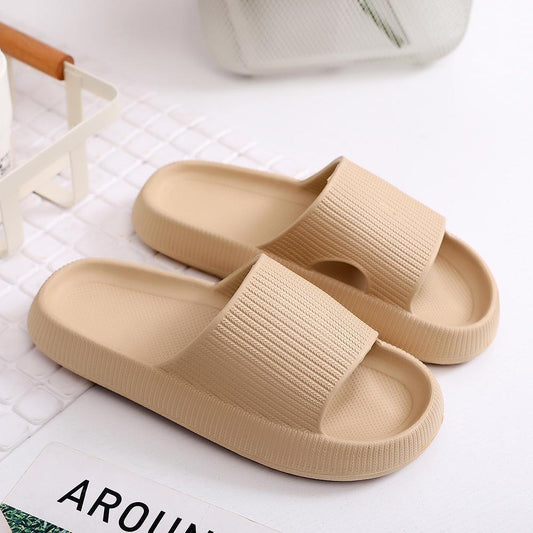
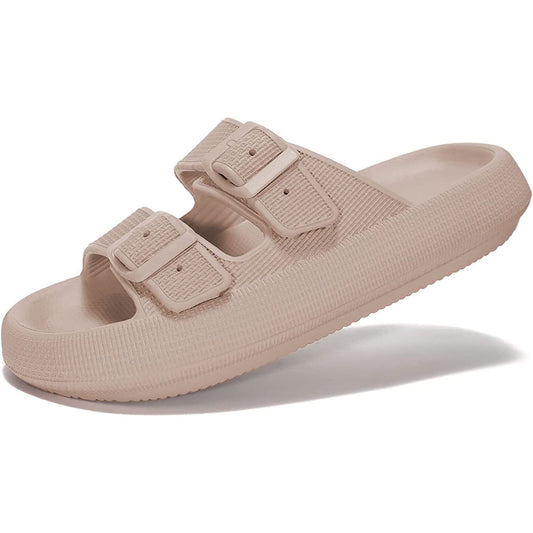
- Sandals and slides: Adjustable straps can help accommodate different forefoot volumes. See slides and slippers.
How to test the fit
- Try shoes later in the day, when feet may be slightly fuller.
- Wear the socks or insoles you plan to use.
- Stand and walk on a clean indoor surface.
- Check that all toes can rest flat without pressure from the upper.
- Make sure the heel does not lift excessively and the foot does not slide forward.
Frequently asked questions
Are women’s wide-toe-box shoes only for wide feet?
No. Some women with average-width heels still prefer more space at the toes. The best choice depends on your individual foot shape, not the label alone.
Should I size up for a wider toe box?
Usually, choose the correct length first and then select the appropriate width or toe-box shape. Sizing up too far can create heel movement and an unstable fit.
Can a toe box be too wide?
Yes. Too much movement can cause rubbing or make the shoe feel insecure. The goal is comfortable toe room with a stable heel and midfoot.
For more options, compare the fit notes and size charts across the Sootheez footwear collection.
This article provides general footwear information and is not medical advice.