

How Pregnancy Changes Your Feet
Pregnancy brings remarkable changes to the entire body — and the feet are no exception. Many women are surprised to discover that pregnancy can significantly affect their foot health, sometimes permanently. Understanding these changes is the first step to finding footwear that keeps you comfortable throughout all three trimesters.
Swelling (Edema)
Swelling in the feet and ankles is one of the most common pregnancy complaints, affecting up to 75% of pregnant women. It's caused by increased blood volume, the growing uterus putting pressure on veins, and hormonal changes that cause fluid retention. Swelling typically worsens as the day progresses and is most pronounced in the third trimester.
Arch Changes and Flat Feet
The hormone relaxin — which loosens ligaments to prepare the body for childbirth — also affects the ligaments in the feet. This can cause the arch to flatten, leading to overpronation and arch pain. For some women, this arch flattening is permanent, resulting in a larger shoe size after pregnancy. Read our guide on best shoes for women with arch pain.
Weight Gain
The additional weight of pregnancy increases the load on the feet with every step, accelerating fatigue and increasing the risk of plantar fasciitis and heel pain.
Center of Gravity Shift
As the belly grows, the center of gravity shifts forward, changing gait and putting different stresses on the feet and lower back.
What to Look for in Pregnancy Shoes
1. Adjustable Fit
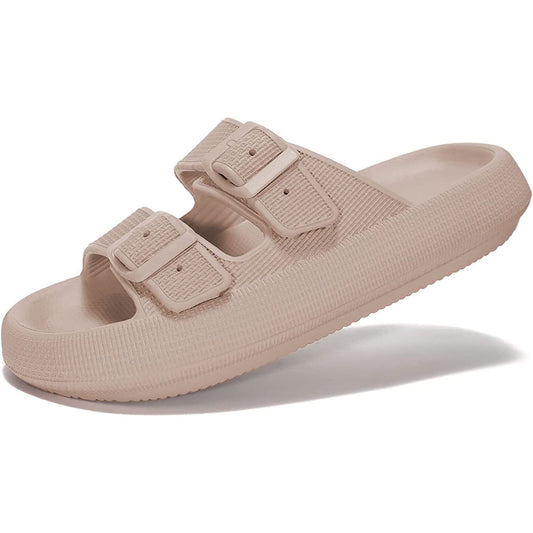
This is the most critical feature for pregnancy footwear. Feet swell throughout the day and change size as pregnancy progresses. Shoes with adjustable straps, laces, or velcro closures allow you to customize the fit as your feet change. Avoid slip-on shoes with a fixed opening that may become too tight as swelling increases.
2. Wide Toe Box
Swollen feet need room. A wide, roomy toe box prevents compression and allows the foot to spread naturally. Read our guide on best shoes for wide feet.
3. Arch Support
With relaxin loosening the ligaments and additional weight increasing the load, arch support is essential during pregnancy. Look for a contoured footbed that supports the arch and helps prevent overpronation.
4. Cushioned Sole
Extra cushioning compensates for the increased load on the feet. EVA foam soles are ideal — lightweight, shock-absorbing, and resilient.
5. Low, Stable Heel
High heels are a bad idea during pregnancy — they shift weight forward, worsen the center of gravity imbalance, and increase fall risk. Flat shoes with no arch support are equally problematic. A low, stable heel with good arch support is the sweet spot.
6. Easy to Put On
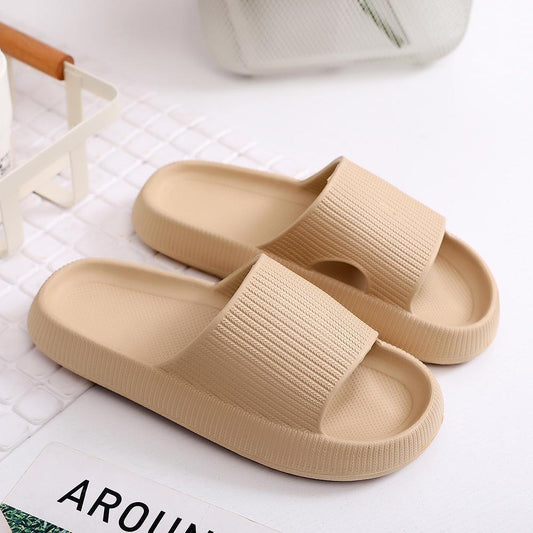
As the belly grows, bending down to tie laces becomes increasingly difficult. Slip-on styles, sandals with easy closures, or shoes with elastic laces are practical choices for the third trimester.
The Best Sootheez Shoes for Pregnancy
Adjustable Comfort Sootheez Sandals
Our top pick for pregnancy. The adjustable straps accommodate swelling throughout the day and as pregnancy progresses, the supportive footbed provides arch support to compensate for relaxin-related arch changes, and the open design keeps feet cool and comfortable. Easy to put on without bending — a major practical advantage in the third trimester.
Premium EVA Orthopedic Clogs – Cushioned Wide Fit
The wide fit accommodates swollen feet, the cushioned EVA sole absorbs the extra impact of pregnancy weight, and the slip-on design is easy to manage as the belly grows. The contoured arch support helps compensate for the arch flattening that relaxin can cause. See our guide on how to choose the right orthopedic clog.
Premium Arch Support Cushioned Flip Flops for Plantar Fasciitis
For warmer months or home wear, our arch support flip flops provide genuine arch support in an easy open-toe design. The wide footbed accommodates swelling, and the cushioned EVA sole reduces the impact on tired, pregnant feet. Read more: who are Sootheez arch support flip flops for?
FlexSlip Orthopedic Slip-On Sneaker
For days when you need a more enclosed shoe, the FlexSlip's flexible upper accommodates foot swelling while its orthopedic footbed provides the arch support and cushioning that pregnant feet need.
Tips for Managing Foot Health During Pregnancy
- Elevate your feet whenever possible — even 15-20 minutes of elevation significantly reduces swelling
- Stay active — gentle walking and swimming improve circulation and reduce swelling
- Wear compression socks during long periods of standing or sitting
- Measure your feet regularly — your shoe size may change during pregnancy
- Avoid standing for long periods without breaks — see our tips on how to relieve foot pain after standing all day
- See a podiatrist if you develop significant arch pain or plantar fasciitis during pregnancy
After Pregnancy: Will Your Feet Go Back to Normal?
For many women, foot swelling resolves within a few weeks of giving birth. However, the arch changes caused by relaxin may be permanent — many women find their feet are a half size or full size larger after pregnancy. If this happens, it's important to be refitted for shoes rather than continuing to wear pre-pregnancy footwear that no longer fits properly.
Final Thoughts
Pregnancy is a time to take extra care of your body — and that includes your feet. The right footwear can make a significant difference in your comfort and mobility throughout all three trimesters.
Explore the full Sootheez collection and find the shoes that will support you through every stage of your pregnancy journey. For more guidance, read our article on orthopedic shoes vs. regular shoes.