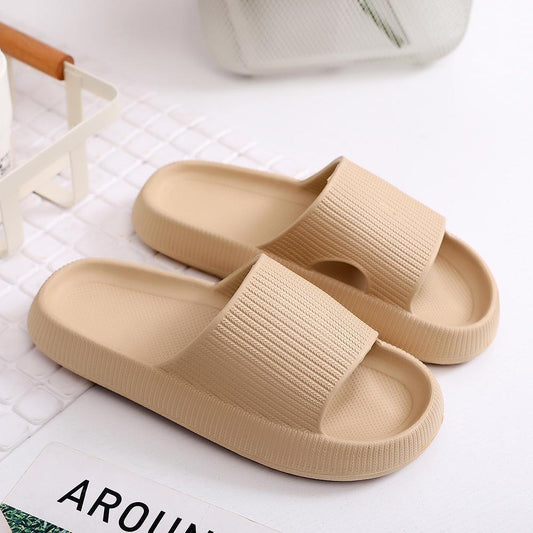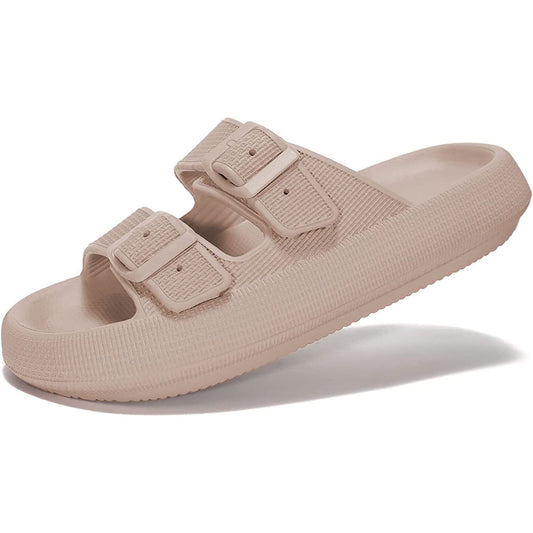


Recovery sandals are cushioned, easy-on shoes designed for relaxed wear after running, training, travel, or a long day on your feet. They can give hot or tired feet more room than closed shoes, but the word “recovery” does not guarantee a medical benefit. Comfort depends on fit, cushioning, stability, and how you plan to use them.
What are recovery sandals?
Most recovery sandals use a lightweight, cushioned footbed with an open slide, flip-flop, or adjustable-strap upper. They are commonly worn after workouts, around the house, at the gym, or for short casual errands. They should complement rest and sensible post-activity care—not replace running shoes, treatment, or professional advice.
What to look for in recovery sandals
1. Resilient cushioning
The footbed should feel comfortable without collapsing so deeply that the foot becomes unstable. EVA and other foams can provide a soft feel, but density, thickness, and shape matter as much as the material name.
2. A stable platform
Press and gently twist the sandal. Some flexibility is normal, but excessive twisting or side-to-side wobble may feel less controlled. A broad base can help the foot stay centered.
3. Comfortable arch contour
Arch support should feel like broad contact under the midfoot, not a hard lump. People with low, medium, and high arches may prefer different shapes. More contour is not automatically better.
4. Enough room for the toes
Your toes and heel should remain on the footbed. If your feet feel fuller after exercise or standing, a broad platform or adjustable strap may be useful. Read our women’s wide-toe-box shoe guide for more fit tips.
5. Secure upper
The upper should hold the sandal without pinching. If you have to curl your toes constantly to keep it on, try a different size, strap position, or style.
6. Traction for the setting
Choose tread appropriate for home, locker room, pool deck, or outdoor use. Water-resistant does not mean slip-proof, and worn soles should be replaced.
Recovery slides, flip-flops, or adjustable sandals?
- Recovery slides: Easy to put on and useful when you want an open design. The strap must fit securely without pressure.
- Recovery flip-flops: Light and open, but the toe post and footbed shape must suit your foot. Explore supportive flip-flops.
- Adjustable recovery sandals: Helpful when foot volume changes or a fixed strap feels too tight. Check that straps do not rub sensitive areas.
Browse Sootheez slides and slippers and compare each style’s size chart, materials, tread, and intended use.
How to choose recovery sandals for runners
- Measure both feet and fit the larger one.
- Try the sandals when your feet are at their typical post-activity size.
- Walk on a clean indoor surface and check for heel lift, toe gripping, or side-to-side movement.
- Make sure your toes and heel do not hang over the footbed.
- Use running shoes for running; save recovery sandals for appropriate casual wear.
Frequently asked questions
Are recovery sandals good for your feet?
A well-fitting pair can provide cushioning and an open, comfortable option after activity. Whether it feels good depends on the wearer, and no sandal is right for every foot or condition.
Can you walk long distances in recovery sandals?
Many are better suited to short, casual wear than extended walking. For long distances, choose footwear designed for the terrain and activity, with secure fit and appropriate support.
Do recovery sandals help plantar fasciitis?
Some people with heel discomfort prefer cushioned, contoured footwear instead of going barefoot, but recovery sandals are not a treatment. A clinician can help identify the cause of persistent pain and recommend appropriate footwear or care.
Should recovery sandals fit loose?
They need room without excessive sliding. Your foot should remain centered, with the upper secure enough that you do not grip with your toes.
A simple post-activity routine
Cool down gradually, change out of damp socks, hydrate, and give your feet time to rest. If you have significant swelling, a new injury, severe pain, or symptoms that do not improve, seek medical advice rather than relying on footwear alone.
For more casual comfort options, explore the Sootheez footwear collection.
This article provides general footwear information and is not medical advice.