

Why What You Wear at Home Matters More Than You Think
Most people are careful about their footwear when they go out — but at home, they shuffle around in worn-out slippers, thick socks, or worse, barefoot on hard floors. What you wear at home matters just as much as what you wear outside, especially if you spend significant time there.
Hard floors — hardwood, tile, laminate, concrete — offer no cushioning or give. Walking on them barefoot or in flat, unsupportive slippers puts the same stress on your feet as walking on pavement. Over time, this contributes to plantar fasciitis, heel pain, and arch fatigue. The right indoor footwear can make a significant difference in your daily comfort and long-term foot health.
The Problem with Most Slippers
Traditional slippers are designed for warmth and coziness — not foot health. Most have:
- Flat, thin soles with no arch support
- No heel cup or structure
- Soft, floppy construction that provides no stability
- Materials that compress quickly and lose what little cushioning they had
Wearing these all day is essentially the same as going barefoot — which podiatrists consistently advise against for people with foot pain. Read our guide on orthopedic shoes vs. regular shoes to understand what features actually matter.
What to Look for in Indoor Slippers for All-Day Comfort
1. Arch Support
The most important feature. A contoured footbed that supports the arch reduces strain on the plantar fascia and distributes weight evenly. This is especially important for people with arch pain, flat feet, or plantar fasciitis.
2. Cushioned Sole
A cushioned sole absorbs the impact of walking on hard floors. Look for EVA foam or similar materials that provide genuine shock absorption rather than just a thin layer of padding.
3. Non-Slip Outsole
Indoor floors — especially hardwood and tile — can be slippery. A non-slip rubber outsole is a safety essential, particularly for older adults.
4. Heel Support
A structured heel cup keeps the foot properly aligned and prevents the heel from splaying with each step. This is critical for people who experience heel pain first thing in the morning.
5. Easy On/Off
Slippers should be easy to slip on and off — that's part of their appeal. Look for designs that are easy to put on without sacrificing fit and support.
6. Breathable Materials
Feet need to breathe even indoors. Breathable materials prevent moisture buildup and keep feet comfortable throughout the day.
The Best Sootheez Indoor Slippers and Slides
Premium Sootheez™️ Comfy Slides
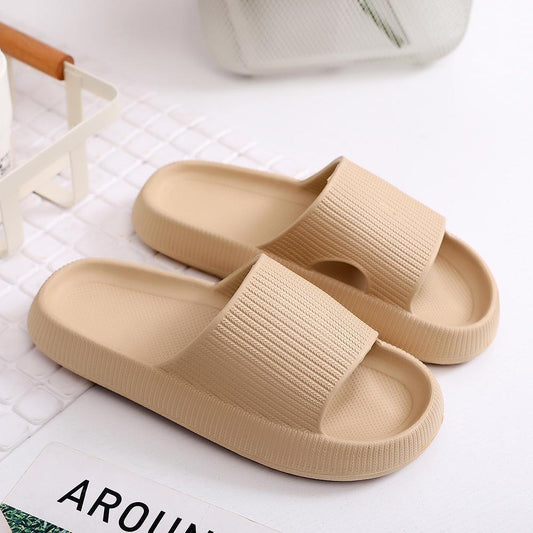
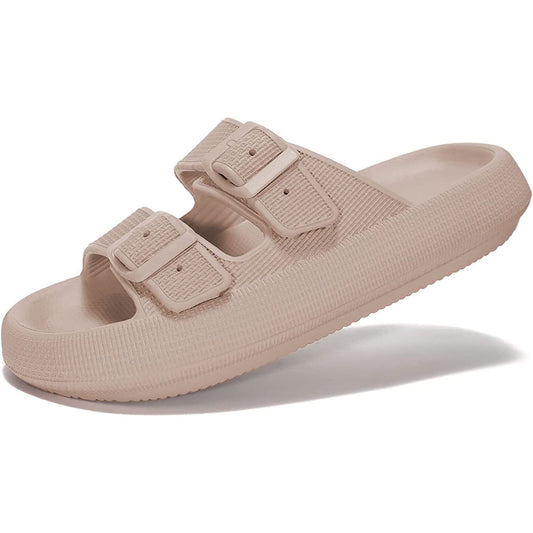
Our most popular indoor option. The cushioned EVA footbed provides genuine shock absorption for hard floors, the contoured design supports the arch, and the open-back slide design makes them easy to slip on and off. Lightweight, comfortable, and supportive enough for all-day indoor wear. A significant upgrade from traditional flat slippers.
Premium Women's Fleece Loafers
For cooler months or people who prefer a closed-toe indoor shoe, our fleece loafers combine warmth and comfort with a supportive footbed. The soft fleece lining keeps feet cozy while the structured sole provides the support that flat slippers lack. Perfect for working from home, morning routines, or relaxing evenings.
Premium EVA Orthopedic Clogs – Cushioned Wide Fit
Many of our customers use our EVA clogs as their primary indoor footwear — and for good reason. The cushioned EVA sole is outstanding on hard floors, the wide fit is comfortable for extended wear, and the easy slip-on design is practical for home use. If you have plantar fasciitis or significant arch pain, these offer more support than traditional slippers. See our guide on how to choose the right orthopedic clog.
Who Needs Supportive Indoor Footwear Most?
While everyone benefits from supportive indoor footwear, it's especially important for:
- People with plantar fasciitis — the first steps of the day on hard floors are often the most painful
- People who work from home and spend long hours on their feet in the kitchen or home office
- Older adults — for whom fall prevention and joint protection are priorities
- People recovering from foot injuries or surgery
- Anyone with bunions, flat feet, or high arches
- People with diabetes — for whom going barefoot is particularly risky
Tips for Better Foot Health at Home
- Never go barefoot on hard floors — always have supportive footwear within reach
- Replace worn slippers regularly — even good slippers lose their cushioning over time
- Stretch your feet in the morning before your first steps — especially important for plantar fasciitis sufferers
- Elevate your feet during rest periods to reduce swelling and fatigue. See our tips on how to relieve foot pain after standing all day.
Final Thoughts
Your home should be a place where your feet can recover and rest — not a place where they accumulate more stress. Upgrading your indoor footwear is one of the simplest and most impactful things you can do for your foot health.
Explore the full Sootheez collection and find the perfect indoor comfort solution for your feet.